How to Make Sourdough Starter From Scratch
In this post, we’re going to make sourdough starter from scratch together. You’re going to come with me every step of the way and I’ll continue to update this post as the starter develops. Additionally, we’re going to discuss the pros and cons to making a sourdough starter versus getting one from a friend (or purchasing one).
This post may include affiliate links, as an Amazon Associate I earn a small commission from qualifying purchases.
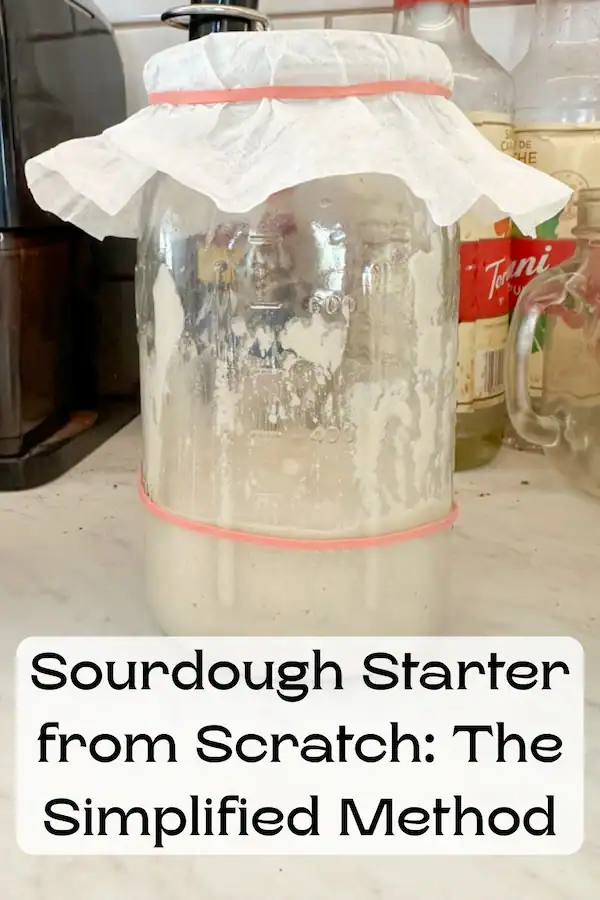
Fun fact: I’ve never made one before. I have always worked with a starter that was given to me about seven years ago! Don’t worry, I have no plans of abandoning her! For the sake of helping others on their journey, I’m getting my own hands dirty.
I read several articles on making your own sourdough starter from scratch, as I haven’t made one before. This is my take on starting one because I have applied the same methods I use with my older, established starter.
If you’re wanting to start making sourdough, you probably already know the benefits of it, so I won’t go into that here. However, I do want to take a moment to explain my flour choices and why you should consider adding this flour to your kitchen.
White Whole Wheat vs. Regular Whole Wheat
What’s the difference? I’m glad you asked. White whole wheat is derived from a different variety of wheat than your regular whole wheat flour. Your typical whole wheat flour comes from a red, hardier, variety whereas the white whole wheat is lighter, coming from a spring variety, and produces a less dense product.
For the last six years I have used King Arthur’s Unbleached All Purpose to feed my starter and white whole wheat for my bread baking.
Sourdough starter can be fed any unbleached flour. I have seen many share that it thrives on rye flour! There are a lot of nutrients for the beneficial yeasts and bacteria in the whole wheat flours that really nourish it. Sometimes it is even recommended to switch to feeding your starter whole wheat flour when trying to help it recover. That said, sourdough also really loves the high gluten content of the all purpose flour and thus will rise better. When using whole wheat flour, it will take slightly longer to get a nice second rise.
Since I have primarily fed my starter for the last six years with unbleached all purpose, that is where my experience lies. However, as I did my research for this, I concluded it made a lot of sense to combine flours to help it get going. So let’s actually get started!
What You Need to Make Sourdough Starter from Scratch
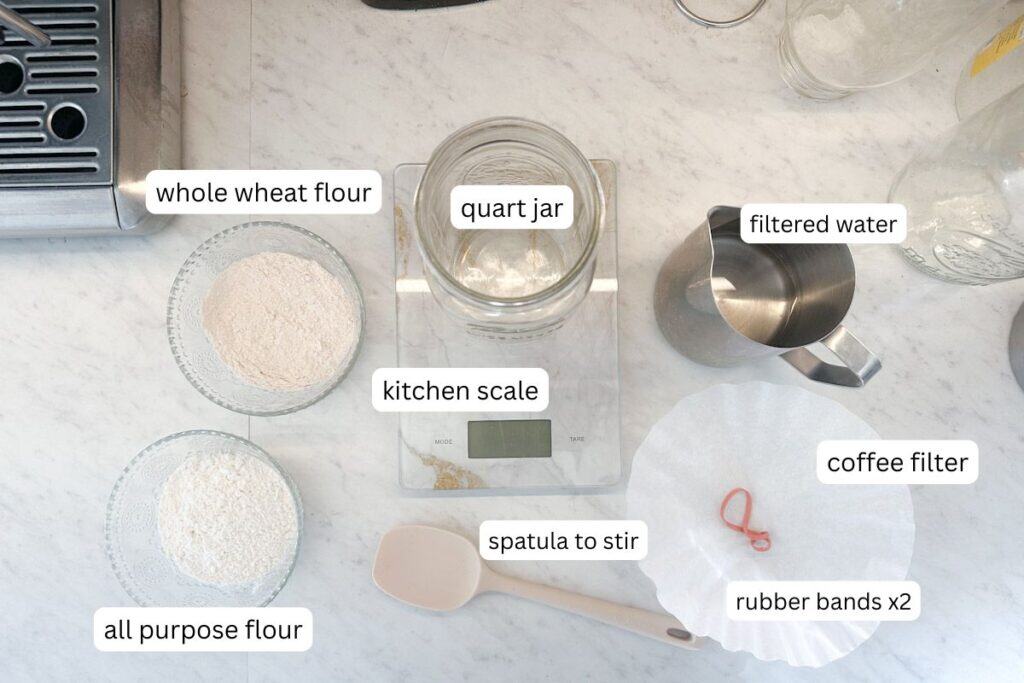
It’s simple, really. To make our sourdough starter from scratch we need a vessel, a kitchen scale, around 2.5 lb of whole wheat flour, around 2.5 lb of unbleached all purpose, a coffee filter, two rubber bands, and filtered water. Oh and something to stir with would be helpful!
I know the internet is divided on this, but I believe in letting the sourdough breathe while out on the counter. It is my preferred method to use a coffee filter or tea towel (secured with a rubber band or canning band) to cover the starter and keep out bugs. This has worked for me for many years and has not caused any issues, other than the occasional time I don’t plan well and it overflows hah!
Day One
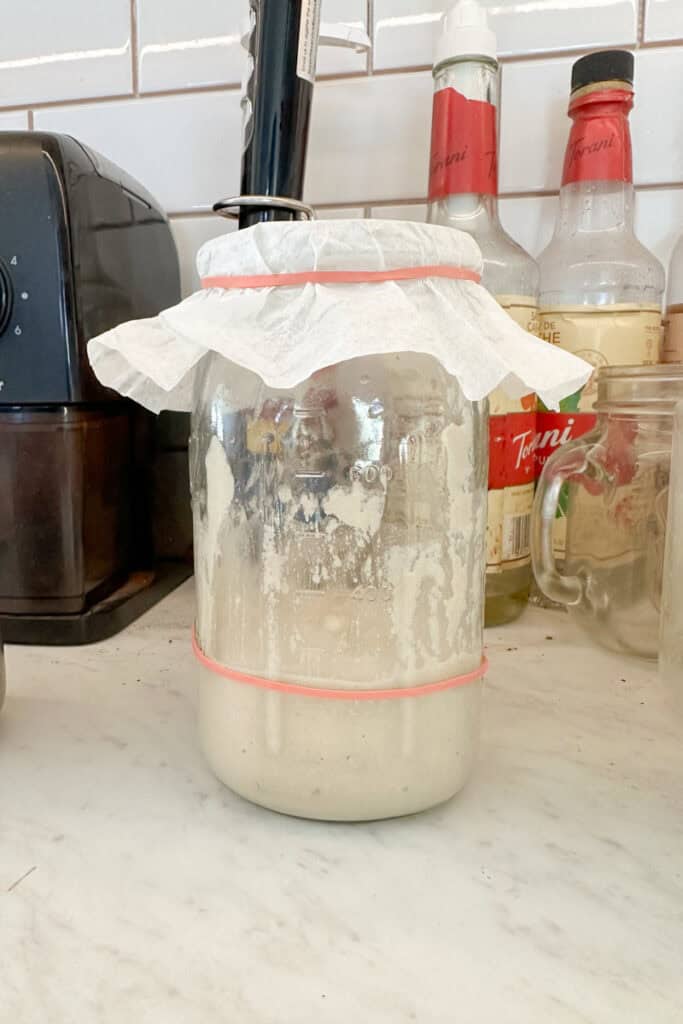
I weighed out 50g of each flour (100g of flour, total) and approximately 125g of water. I stirred to combine, covered with the coffee filter (using a rubber band to hold it down), and let it sit on my counter for twenty-four hours.
Day Two
The next day I weighed out 75g of starter to keep, fed it another 100g of flour (equal parts of whole wheat and unbleached), and this time added 115g of water.
Day Three
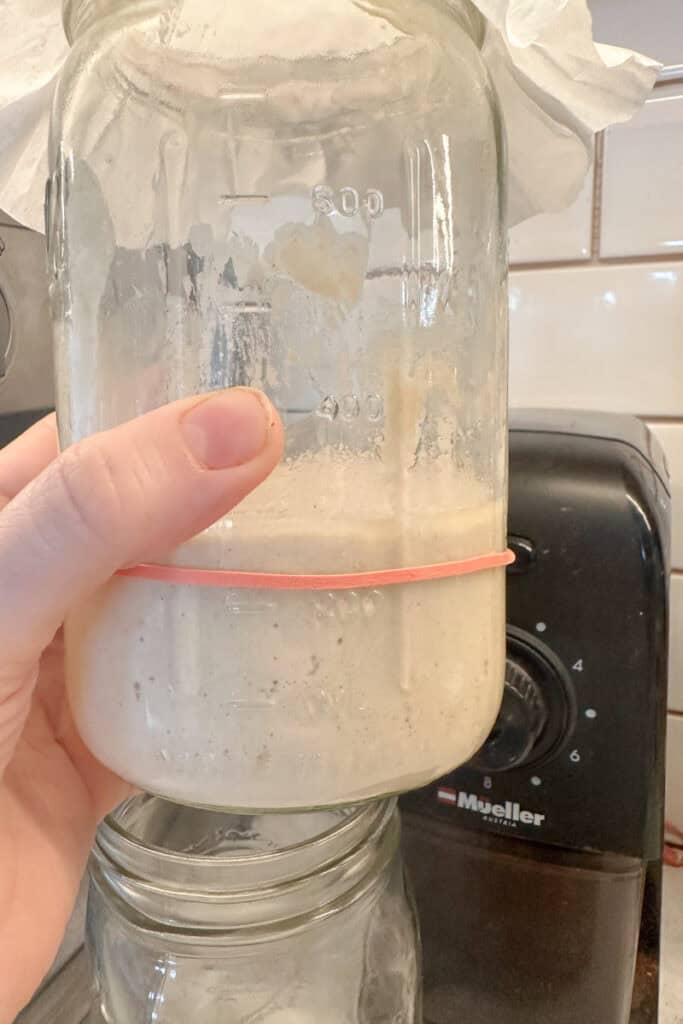
I saw a false rise on this day, which I read is common. It’s already beginning to smell like something’s working here! I weighed out starter to keep and fed it by repeating the steps from day two.
Day Five and On…
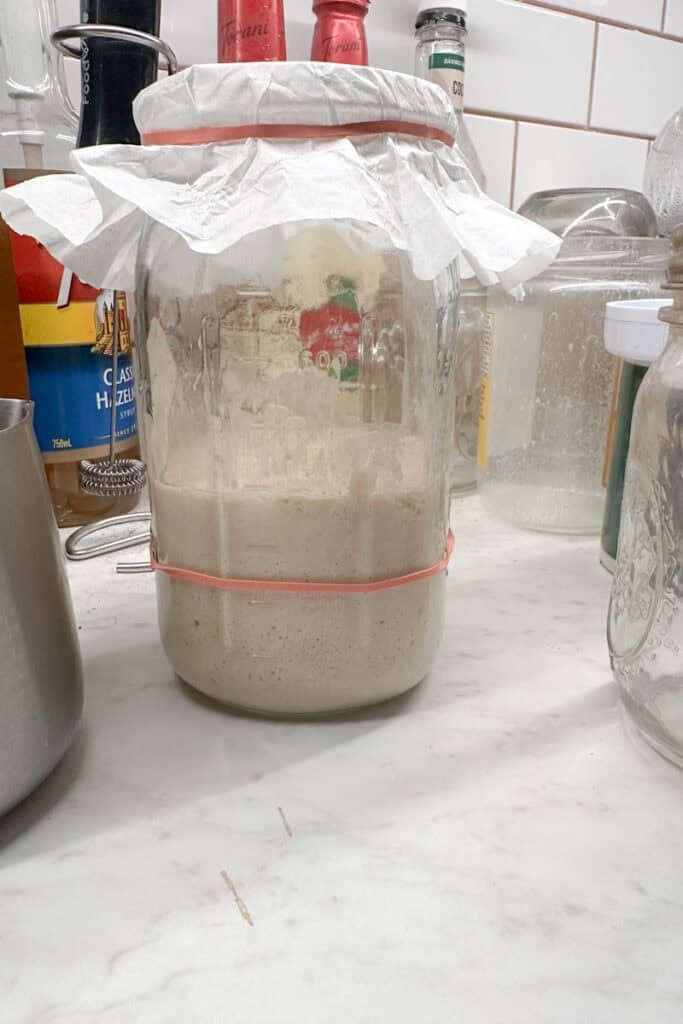
From day five on, I have been keeping back 30g of starter and continuing to feed 50g whole wheat and 50g unbleached all purpose, with 100g water. My starter is regularly doubling in size–sometimes more–and I’ve started feeding twice a day, morning and evening. The discard is really accumulating! But no fear. Our family’s favorite pancake recipe takes 4 cups of discard to feed us. Below I’ve listed some ideas to use up the excess.
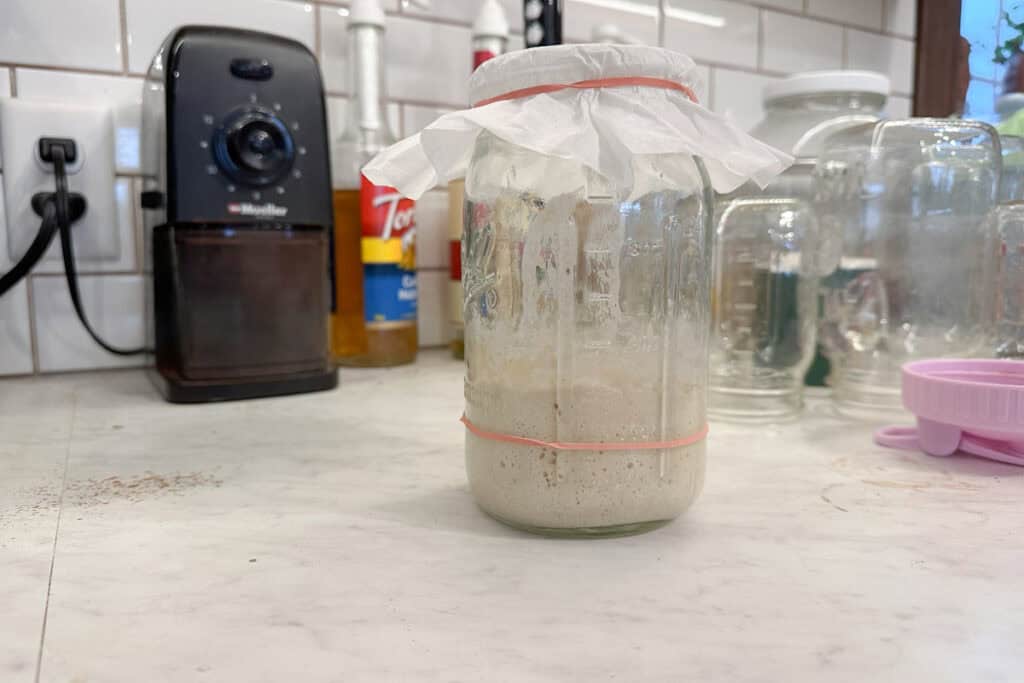
The starter has started to develop a sweet smell! I’m very pleased. It never smelled bad, so to speak, just not sweet and yeasty like my original. Before I bake with my original starter I’m often feeding it three times, breakfast, lunch, and supper. Thus, I’m going to continue feeding the new one twice a day for the next few days with intentions to try it out next week.
Day Eleven
I probably shouldn’t, but I’ve been experimenting already. It seems very active at this stage, so I guess I became rebel enough to renege the plan I’d made. This is unusual for me as I am a rule follower, but maybe not when sourdough is concerned. Hah!
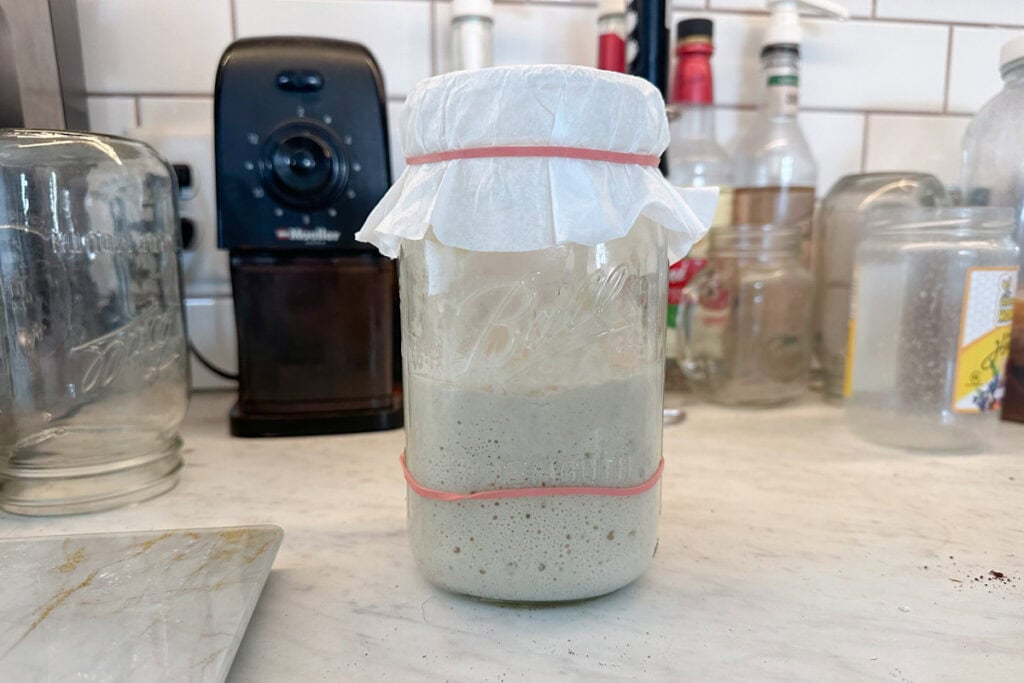
I really wanted to cut back on the amount of flour I was using and, it hardly rose. So, truly, follow the plan. Stay the course. You’re feeding it roughly 1:3:3 ratio 2x a day at this stage!
But, what do I do with the discard?
Here to interject this important answer! I started keeping my discard around day five, and once I started feeding it twice a day (around day nine) it really started accumulating. I never realized how much you end up with when you make a sourdough starter from scratch!
As I mentioned above, pancakes are a great way to use up a bunch. So is sourdough crackers. I’ve linked a recipe I recently discovered that I’ve made a few times now to help chip away at my stash. Interestingly enough, I’m discovering new ways to use up discard all the time. From replacing a roux in mac n’ cheese, to doing some cookie and muffin baking, uses abound! That said, I do advise keeping 1/4 cup of discard in your fridge as backup just in case life happens.
Day Fourteen
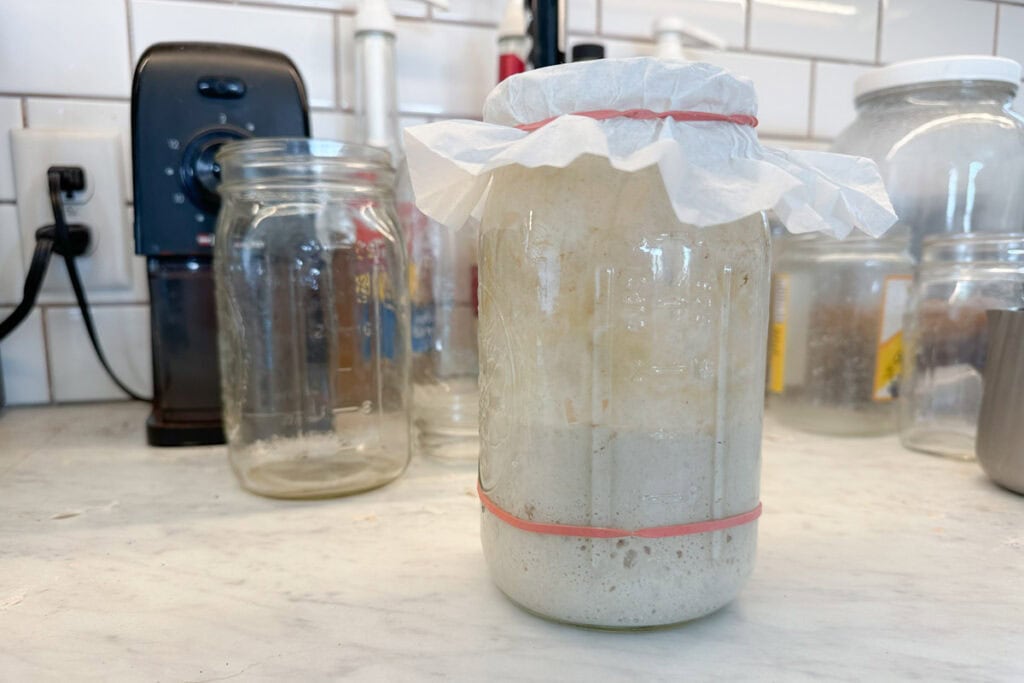
It’s been about a week of feeding this twice a day and yesterday I decided I couldn’t keep up with the discard. Therefore, I reverted to feeding once a day. It’s showing lots of signs of being ready to use! I am very tempted to try baking with it, especially if it’s being fed twice a day. However, I’m low on flour, so when my order comes in next week I will give it a try and share my results below.
Overall, my research informed me it would be minimum two weeks before a sourdough starter from scratch consistently rose and fell, and my starter achieved that at about a week to ten days. I’m pleased!
So should you make a sourdough starter from scratch or buy one?
There are pros and cons to each! Let’s explore the pros to starting a sourdough starter from scratch first.
To start off, you get to claim that you did it! This is a huge accomplishment. I knew few people who have successfully made their own sourdough.
Secondly, you now have the confidence to care for it. Often when people get starter from me they have lots of questions about what’s normal, from smells to texture.
What about the cons? Well, as mentioned, there is a lot of discard involved in making your own sourdough starter from scratch. Once you hit the feeding twice a day, I do mean a LOT of starter. So much that my family of seven struggled to keep up and after about a week I became worn out from trying to use it up. And we typically do go through a considerable amount!
The pros for getting a starter off someone else are that you immediately have a mature starter. There isn’t a long waiting period for it to be ready, so you can get to baking with it much sooner, within twenty-four hours easy.
The only cons I can think of is being unacquainted with how to care for it and so you might end up killing it or giving up prematurely. When I share my sourdough with local friends I pass out a copy of my care notes and go over everything with them. Many of the ones I’ve taught have become very successful with their sourdough!
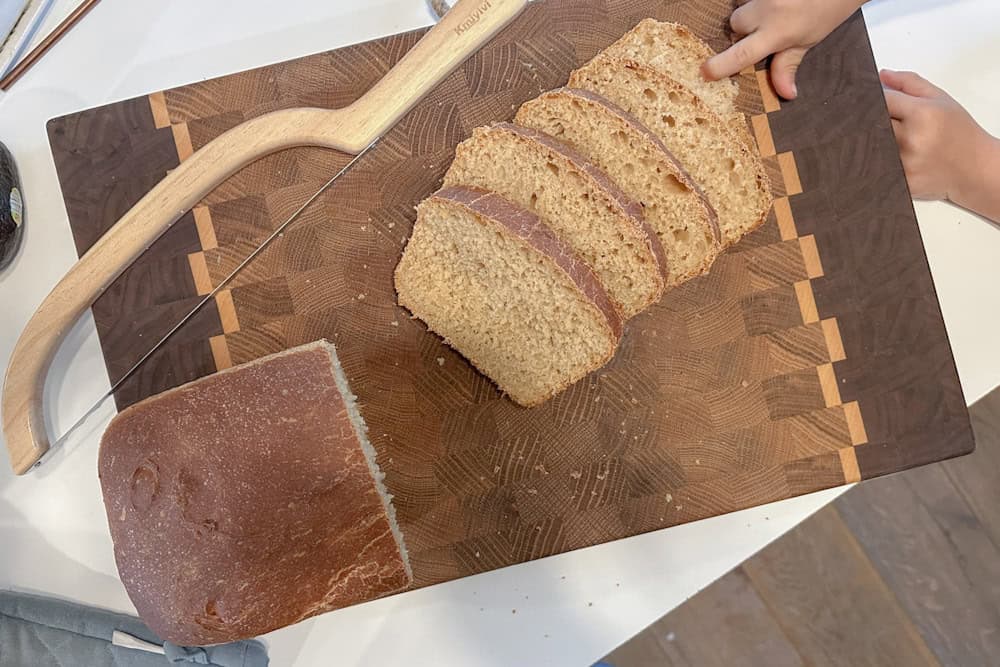
What I’ve Learned from Making a Sourdough Starter from Scratch
I am truly surprised at how quickly and easy this was to accomplish. However, I do attribute my success to my years of working with a sourdough starter. All I did was apply my same principles to the new one. It’s been a pleasant experiment! Is it worth doing? I think so, especially if you don’t have a sourdough friend.
It’s really important to remember the wild yeasts are micro creatures that need to eat regularly and breathe to thrive. A sourdough starter is a home for them when the proper environment is cultivated for them. For a baby starter, I encourage feeding high ratios (1:3:3, as I did from day five and on) and if you’re wanting to bake feeding it at least two times (breakfast and supper) with that same ratio the day before. Or, in contrast, if you want to mix your dough in the evening then it would be the previous morning and evening that you feed.
Beyond the kitchen, I love to blog about sewing or gardening! I hope you’ll check out those posts and let me know what other hobbies you have. Drop your questions and sourdough problems in the comments. I’m working on a FAQ/Troubleshooting Sourdough post! I will update this when it’s live.
A simple and straightforward guide to get started. Love this! Thanks for including my sourdough banana bread muffins in the discard recipes–always an easy and yummy way to use up discard!
Thank you so much, Annabelle! Love your recipes. 🙂